Listening, Mapping, and Connecting: The State of Leadership in Colorado
Leadership in Colorado is at a pivotal and promising moment. Across our state, communities are navigating complex economic, social, environmental, and generational challenges, which makes strong, connected leadership more important than ever.
That belief is the motivation behind our State of Leadership Initiative, a multi-year effort to better understand, strengthen, and connect the leadership fabric of Colorado.
“The State of Leadership” carries a double meaning as both a question and a vision. We’re asking, “What is the current state of leadership in Colorado?” while also aspiring for Colorado to be known as the State of Leadership.
Reflections From Initial Phase: Listening Deeply and Broadly in 2025
Phase I of the initiative began earlier this year. Over the past 10 months, we’ve been in listening mode: convening sessions, conducting interviews, and gathering insights from leaders across the state. Our goal: to hear what leaders are thinking, feeling, and striving towards, and to use those perspectives to inform shared strategies and investments going forward.

To date, we have engaged nearly 900 participants from across Colorado, representing all 64 counties from mountains to plains and rural to urban landscapes. Our participants have also come from a wide range of sectors, backgrounds, industries, and levels of leadership. We’re thankful for our partners, and many have expressed gratitude for the opportunity to share their insights and perspectives.
Each convening has centered on a shared conversation where participants reflect on their own leadership challenges, engage with other leaders in their community, sector, or region, and exchange the hurdles they face and lessons they’ve learned. Our analysis is helping us map leadership practices, identify opportunity gaps, and unearth trends in how leadership is evolving statewide.
Exploring Themes & Emerging Insights
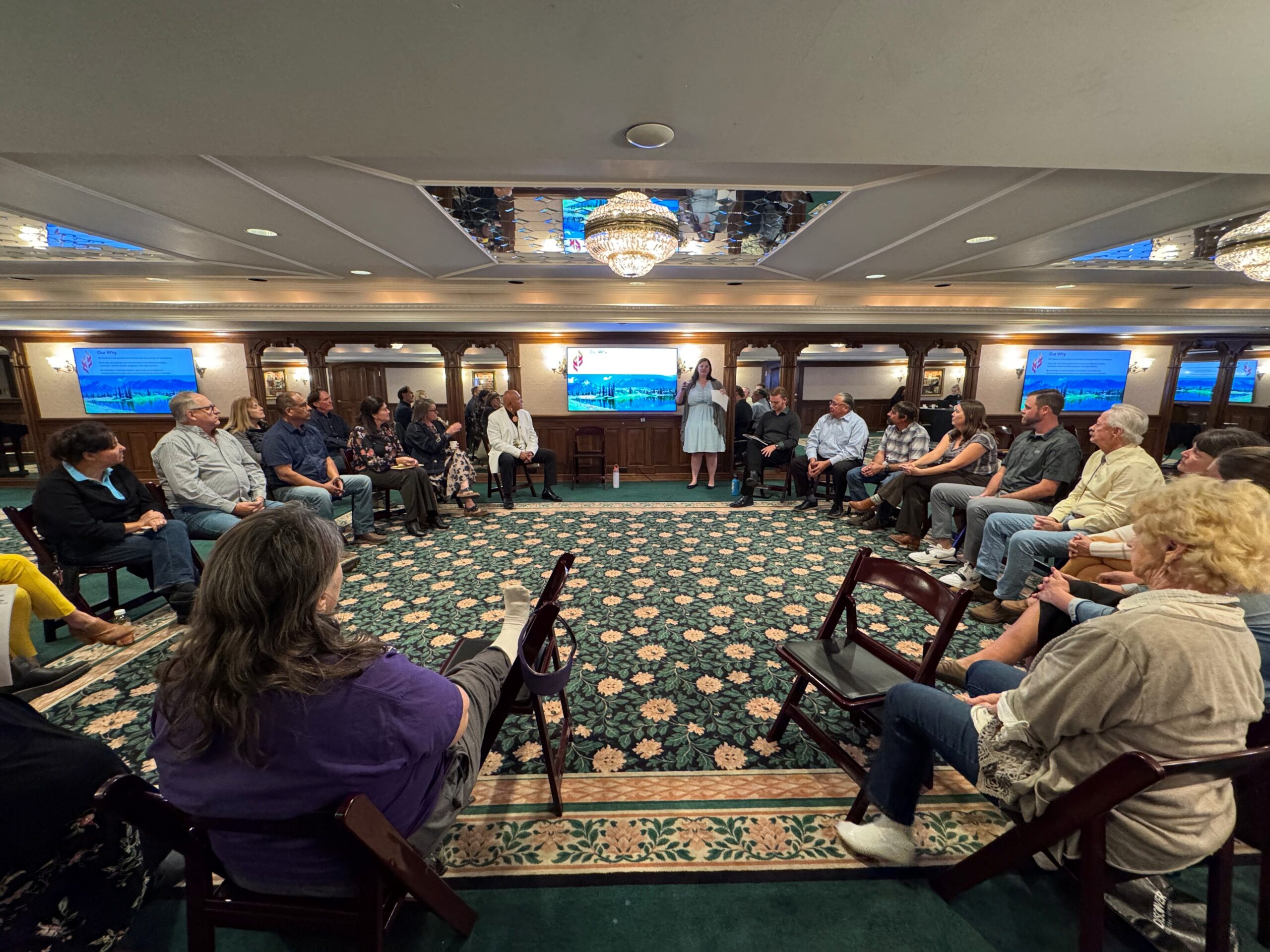
So far we have helped connect leaders, sparking relationships that are beginning to develop into deeper, in-person collaborations within their communities. Each convening has lifted up local voices, offering insight into the distinct challenges and opportunities that shape leadership across the state.
These facilitated discussions are exploring three primary themes of leadership:
- Relationships: We are exploring the quality of relationships, understanding which organizations and people are working together well, and finding out which communities do not yet have established trust. There are regions, counties, and communities where relationships are strong and there are also opportunities for further bridge building.
- Resources: We are working to understand how access to resources differs across communities. We are hearing first-hand from leaders how communities, local governments, funders, and/or other organizations are helping to address the interconnected challenges that accompany these disparities in resource access.
- Qualities of leadership: Finally, we are exploring the different styles and expressions of leadership in diverse contexts around the state. As we listen to the many kinds of leaders shaping Colorado — from those with titles (more formal) to those more quietly driving change (informal) — we are finding smarter ways to share resources, bridge gaps, and make communities stronger.
Connections and common themes are also starting to emerge, beginning with the need for more intentional listening and curiosity. Given that more analysis and deeper reflection are required before any definitive findings can be confirmed, here are some of our initial insights:
- Effective engagement with leaders in elected roles is both more critical and difficult than ever, so training on conflict transformation is needed.
- In a number of regions and communities, there is a definitive need to create training programs and a leadership pipeline for rural nonprofit boards.
- Nearly all communities have emphasized the importance of engaging young people in leadership, which will require addressing the varied barriers they currently face.
- More limited financial resources mean rural leaders invest in relationships and social capital, assets that often make their communities feel more resourced than they may appear to an outsider.
- Rural leaders emphasize that policies developed at the state level can ignore the human and financial constraints of rural life.
What This Means for Colorado and Our Shared Work Ahead
While Boettcher is leading this initiative, we are partnering with a number of organizations to make these conversations happen. Many of them are listed below.
We are excited to continue working with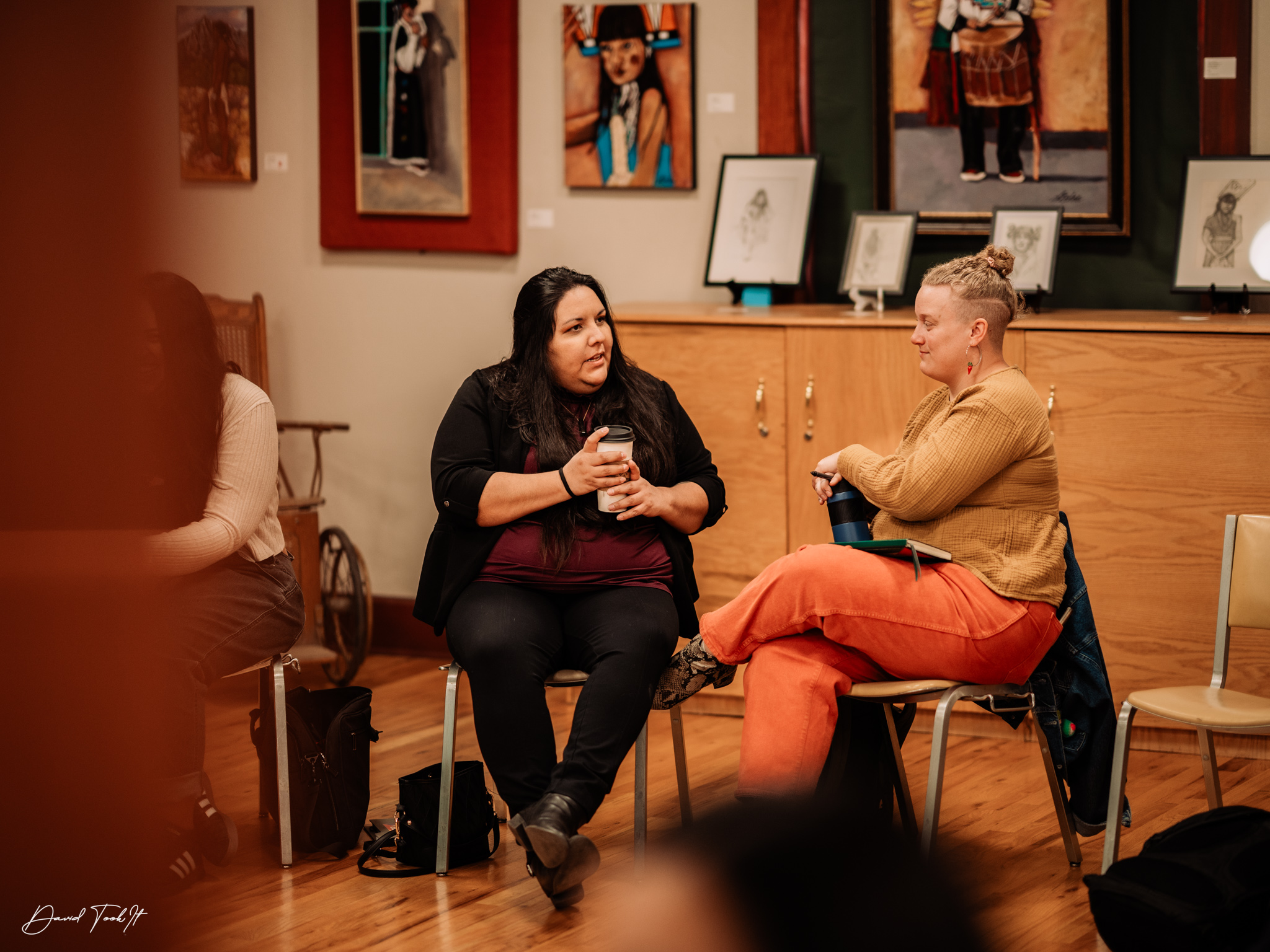 our partners on charting the path ahead, which includes a statewide survey and publishing and presenting our findings over the next two years. We will be working within communities to reflect on the findings and create actionable outcomes together.
To learn more the State of Leadership initiative, please visit https://boettcherfoundation.org/state-of-leadership/.
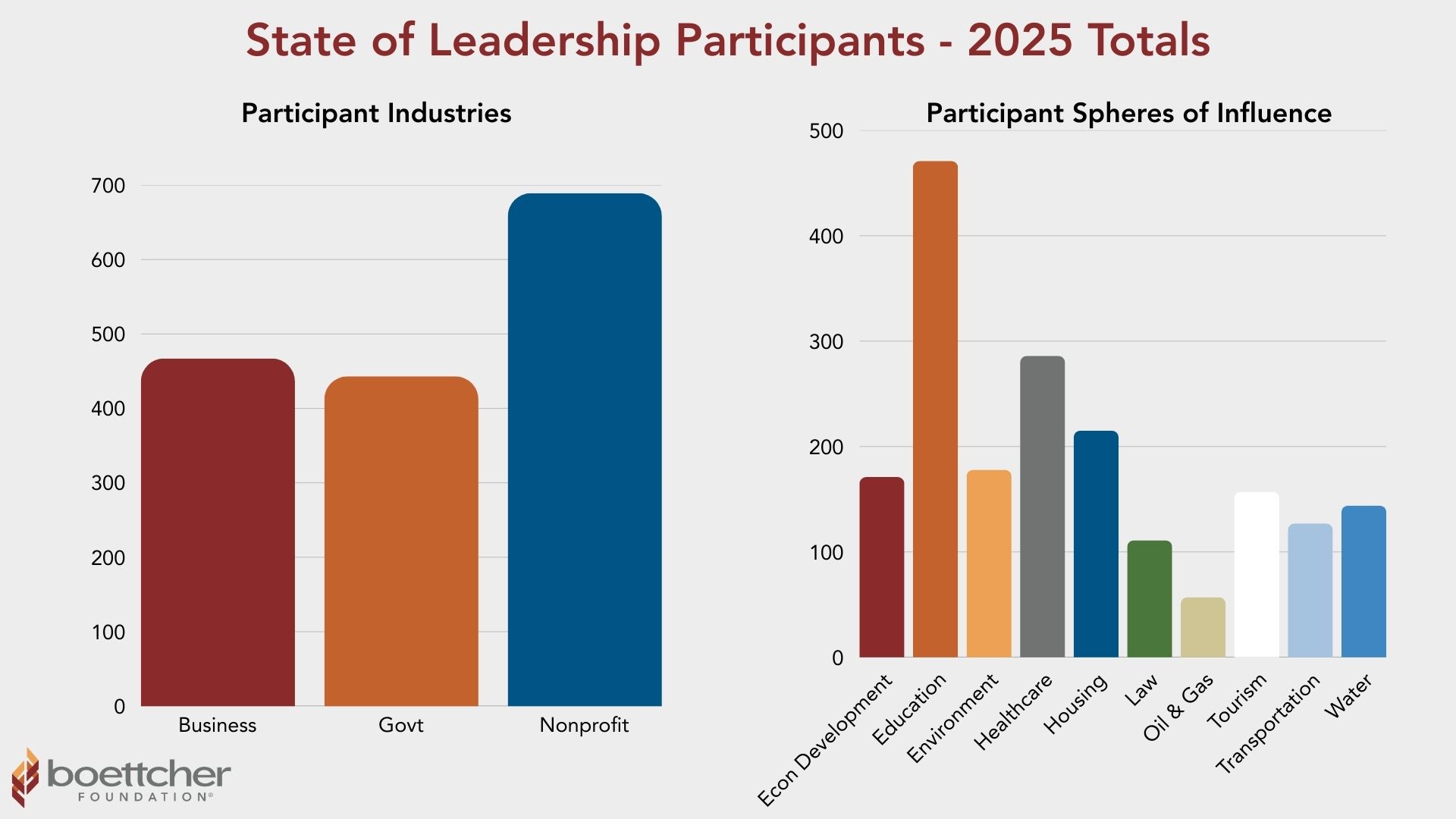
Update (December, 2025): This graphic shows all of the industries represented in convenings from March-December 2025.
Total Participants: 1,024
Total Discussions Held: 48
Below is a list of organizations who we have partnered with to convene community leaders thus far:
Civic Results
CiviCO
Colorado Association of School Boards
Colorado Counties Inc.
Colorado Hospital Association
Colorado Nonprofit Association
Colorado Oil & Gas Association
Colorado Water Congress
Denver Metro Chamber of Commerce
Economic Development Alliance Summit
El Pomar Foundation Regional Councils
FFA State Teachers and Students
National Civic League
Philanthropy Colorado
That’s the Spirit of Boettcher.