Statewide conveners are building local leadership, strengthening civic engagement, and connecting communities.
Across Colorado, conveners are helping communities move forward by doing something deceptively simple: bringing people together.
They get the right people in the room, create space for them to listen, connect people who should know one another, and ask the questions that help communities wrestle with what comes next.
Done well, convening builds something that is hard to manufacture any other way: trust, relationships, and the conditions for people to lead together.
And often, the impact starts with a single connection.
A town administrator realizes the community down the road, or on the other side of the state, is wrestling with the same issue. A nonprofit leader meets a funder who understands the challenge she has been trying to solve. A young leader suddenly finds herself in a room, and a network, that previously felt out of reach. People with opposite perspectives discover they have more in common than they thought.
Along the way, a new idea may arise. Sometimes a partnership. Sometimes it is simply the start of a relationship that becomes important months or even years later.
That is why conveners matter.
Across Colorado, organizations including CiviCO, The Civic Canopy, Civic Results, Colorado Nonprofit Association, Community Builders, Community Resource Center, Courageous Colorado, and Colorado Project 2.0 are doing this work in different ways and different places.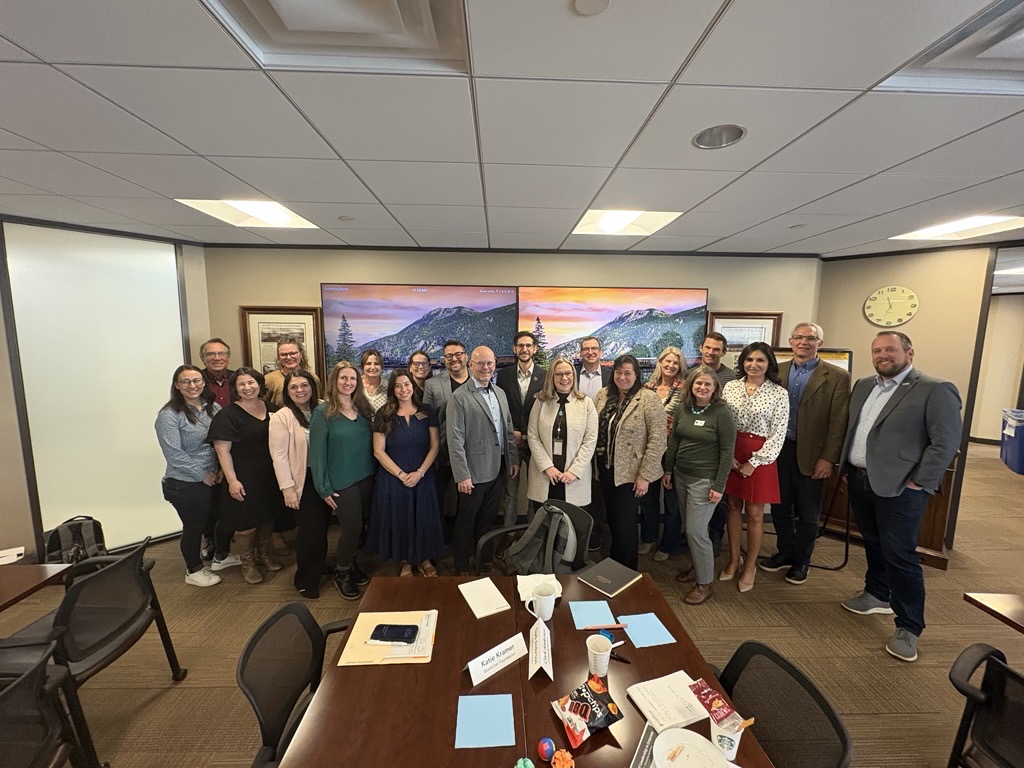
What they have in common is a statewide view paired with work that happens on the ground. They run leadership programs, bring stakeholders together, strengthen community networks, create opportunities for civic involvement, and help people see a role for themselves in shaping the places they call home.
They also help strengthen something Colorado needs more of: the connective tissue between its leaders.
Someone has to set the table
Convening is easy to measure by the obvious things: how many people came, how many counties were represented, or how many sessions were held.
The more meaningful impact is often harder to see.
Perhaps it is who met whom, or who heard a perspective they had not considered. Who walked away with a new resource or idea, or who gained enough confidence to speak up. Maybe the most notable impact was invited into a leadership circle for the first time.
In many ways, conveners help create the conditions for leadership to happen.
That matters because leadership does not belong only to certain people with titles. It happens in town halls and nonprofit boardrooms, in businesses and schools, around kitchen tables and in community centers.
And sometimes the first step toward deeper civic or community involvement is simply being invited.
“In a big state with as many distinct places and perspectives as Colorado, leadership often starts with connection,” said Katie Kramer, president & CEO of the Boettcher Foundation. “Convening brings people across places, sectors and perspectives together to build trust, find common ground and see themselves as part of something larger. That is how stronger communities, and new leaders, take shape.”
Different approaches, common purpose
Each of these organizations comes at the work differently.
CiviCO works across sectors to connect and develop leaders who want to make a difference in Colorado. Its newly launched Impact Forum builds on that work by creating a year-round community where leaders can learn together, engage with issues shaping the state, and work more deeply with others around shared challenges.
The approach combines monthly leadership sessions with gatherings focused on issues such as housing, workforce, health, and education, along with smaller catalyst groups where leaders can dig into a particular challenge or opportunity.
That cross-sector piece is important, said DJ Whetter, managing director of CiviCO, because Colorado’s biggest challenges rarely fit neatly within one organization or one sector. For example, housing isn’t simply a government issue. Workforce isn’t only a business issue. Strong communities aren’t the sole responsibility of nonprofits.
The more leaders know and trust people outside their own circles, the more possibilities there are for connection and working differently.
“Leadership is lonely work,” Whetter said. “Most leaders are carrying hard decisions without many places to think out loud, learn from peers, or be honest about what they don’t know yet. The Impact Forum is about building the community and support leaders need to keep going. When people know and trust each other across sectors, they stop working around one another and start working together on what Colorado needs.”
The Civic Canopy also puts relationships at the center of its work, with an emphasis on building the trust and capacity people need to collaborate across differences and tackle the challenges no one can solve alone.
One example is its Colorado Civic Collaboratory, a network of civic leaders from across sectors and the political spectrum who come together for relationship building, thought partnership and, importantly, concrete commitments to one another’s work. Members bring forward ideas or projects and others offer connections, resources, expertise, and other forms of support that can help move the work forward.
“The Civic Collaboratory is a great example of civic mutual aid in action,” said Bill Fulton, executive director of The Civic Canopy. “I gave a 30 second pitch at the collaboratory, and two weeks later we are pulling off a pre-election event about the Blue Book in the San Luis Valley for 200 people, with costumes and pozole. Civic health is alive and well in Colorado.”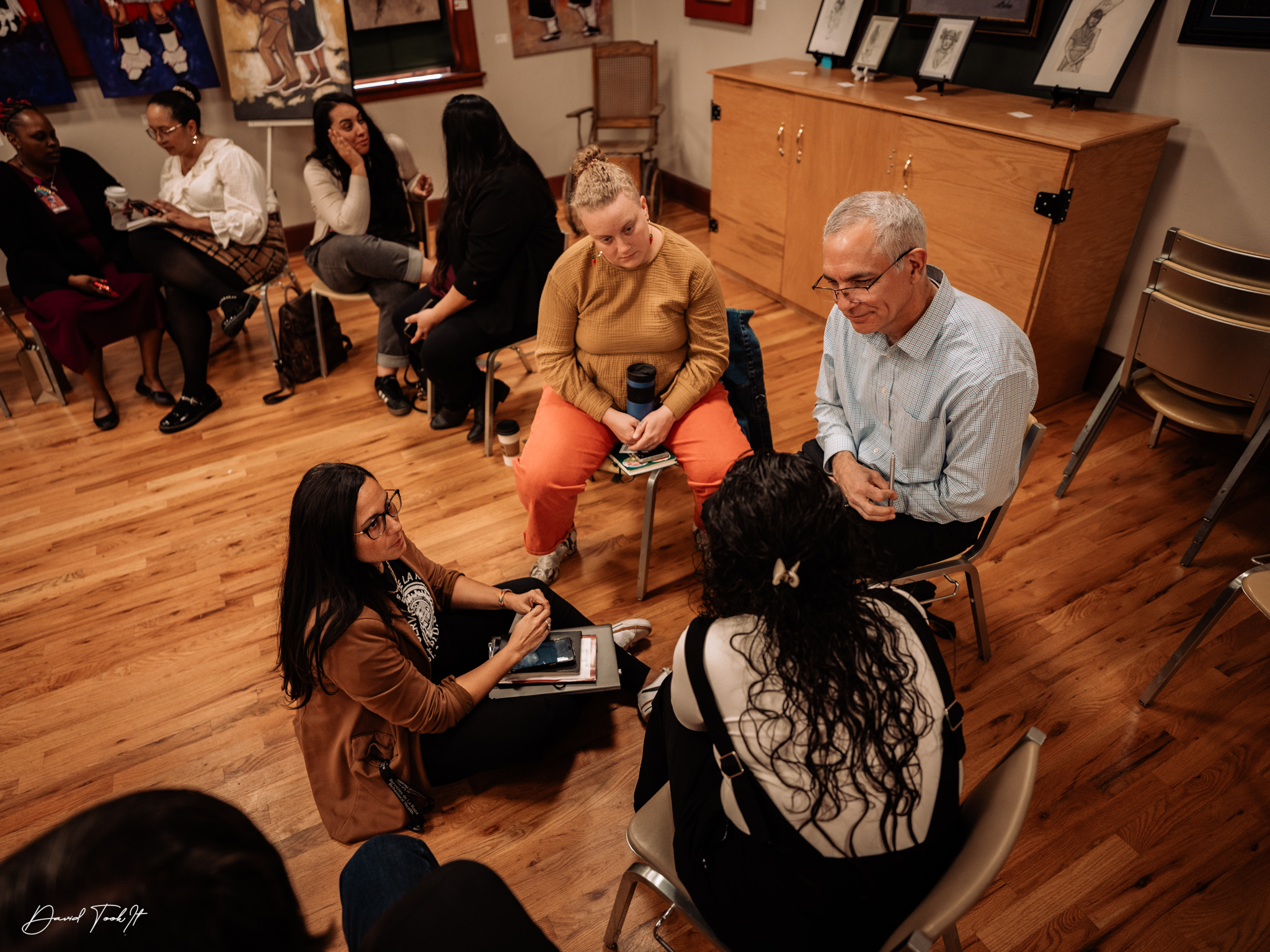
The collaboratory is a practical example of what good convening can make possible. The goal is more than gathering around a table, Fulton said. It is to build the relationships and mutual investment that allow ideas to travel, partnerships to form, and people doing difficult civic work to support one another.
Community Builders approaches the work through place. It works alongside communities to bring residents, local leaders, and stakeholders together to understand the changes shaping their towns and regions, and help local people define priorities, build shared direction, and develop solutions.
That local ownership matters, particularly navigating difficult issues like growth, housing, and economic change. Engaging people directly in understanding and solving local challenges builds ownership, moves people beyond entrenched positions, and creates stronger solutions with the support needed to move them forward.
“Communities make the most progress when residents, the people who know and love a place, are brought together to grapple with local challenges, work through different perspectives and trade-offs, and develop solutions,” said Clark Anderson, executive director of Community Builders.
For Community Resource Center (CRC), much of that work happens regionally, meeting rural communities where they are and creating opportunities for leaders, funders and partners to build relationships close to home.
Through its mix of Rural Centered Programming, including Rural Philanthropy Days, CRC connects nonprofit leaders, funders, and community partners across Colorado.
Effective convening is not about arriving in a community with the answer. It starts by listening to the people who know the place best. They know its strengths, its history, its relationships and the efforts that have already been tried.
The role of the convener is often to make sure those voices are heard and connected.
“We believe connection is foundational to capacity,” said April-Dawn Knudsen, CEO of Community Resource Center. “When nonprofit leaders have the opportunity to come together, build relationships, share what they’re learning and connect to resources and one another, they are better equipped to navigate challenges and move the work forward.”
Civic Results brings another lens to the work, often connecting local elected officials and community leaders facing challenges that don’t stop at a city or county line.
Through efforts such as the Metro Mayors Caucus, Municipal Leadership Academy and Building Bridges, Civic Results creates opportunities for leaders to develop relationships across jurisdictions and work through regional issues together.
There is real value in building those relationships before they are urgently needed.
It is much harder to introduce yourself, build trust and figure out how to work together in the middle of a crisis or contentious issue. Conveners create opportunities for leaders to establish those connections when there is still time to listen, understand and find common ground.
“Relationships are really the foundation of regional collaboration,” said Heidi Williams, president & CEO of Civic Results. “When leaders know one another, trust one another and understand where each other is coming from, they are much better equipped to tackle the hard issues, especially the ones that don’t stop at a jurisdictional boundary. Our job is to create the space for those relationships to grow before the difficult conversation or crisis happens.”
The Colorado Nonprofit Association plays a similar connecting role for a sector that reaches into virtually every Colorado community.
Nonprofits may work on very different issues, but many face remarkably similar questions about leadership, funding, governance, workforce, and sustainability.
By bringing nonprofit leaders together to learn, share experiences and advocate around issues affecting the sector, the association helps organizations see beyond their individual missions and understand themselves as part of a statewide network.
For a small organization or a leader working in a rural community, that can also mean something even more basic: knowing you aren’t doing the work alone.
Civic engagement starts locally
Other statewide conveners are putting particular emphasis on the connection between local participation and a stronger civic culture across Colorado.
Courageous Colorado, led by Dr. Landon Mascareñaz, creates opportunities for Coloradans to engage across political, geographic, and other differences. Its work is rooted in listening and bringing people together to wrestle with difficult questions about opening Colorado’s democracy.
That kind of engagement asks something different of participants. The goal is not to put people in a room because they already agree. It is to create enough trust and shared stake for them to stay in conversation when they don’t.
In a time when disagreement can quickly become division, those spaces give people an opportunity to practice something fundamental to civic life: listening, participating and seeing one another as partners in a shared future.
“Colorado needs courageous people from every background who are willing to reject the labels that tell us we are enemies before we ever meet,” said Dr. Mascareñaz. “Open democracy asks more of us: to listen across our differences, stay in relationship when we disagree, and recognize that no party or ideology owns our future. An open future belongs to all of us—and we have to build it together.”
The Colorado Project 2.0: Rural Renaissance is taking that same idea into three distinct parts of rural Colorado: the San Luis Valley, Yampa Valley and Northeast Colorado.
Led by the University of Denver’s Josef Korbel School of Global and Public Affairs and the Scrivner Institute of Public Policy, the effort brings together local leaders and statewide stakeholders to identify what rural communities are experiencing, what is working, and what state-level decision-makers need to better understand.
The aim is larger than any one regional conversation. By looking for themes across three different parts of the state, the project is working to elevate a stronger, more unified rural voice that can help inform approaches to statewide action, policy, and investment, said Jack Becker, project lead.
“If we are to break out of the deficit-based narratives about rural places that constrain our understanding of rural assets and innovation, then we must start by changing the nature of the relationship,” Becker said. “We must go beyond listening to find ways to act together to build a prosperous Colorado for all our communities.”
Taken together, these organizations show how civic engagement often grows: locally first.
People participate because an issue matters to their town, their organization, their school, their neighborhood or their family. A strong convener helps connect that local experience to other people, other communities and, eventually, a larger statewide conversation.
What we’ve heard from Colorado
That work connects directly to what we have been learning through the Boettcher Foundation’s State of Leadership initiative.
Over the past year, we have listened to more than 1,000 Coloradans from all 64 counties talk about leadership: what is working, what gets in the way and what could make leadership stronger in their communities.
Different places have different challenges. But several themes have come up again and again.
Relationships matter. Access to resources matters. And people want stronger and more clear pathways for the next generation of leaders.
We have heard rural communities describe relationships and social capital as some of their greatest strengths. We have also heard concern that leadership responsibilities often fall to the same small group of people over and over, whether that means serving on boards, organizing events, leading initiatives, or stepping up when a community needs something done.
We have come to call this the familiar “same 10 people” problem.
And we have heard a desire to identify, invite, and develop the next 10.
We have also heard that many barriers to leadership aren’t about whether someone has the talent or desire to lead. They are about capacity, time, money, childcare, housing, and access to the networks where opportunities often begin.
Conveners can’t solve all of those challenges alone.
But they can make the circle wider and deeper so that local communities can.
They can notice who isn’t at the table. They can connect an emerging leader with someone who opens a door. They can help resources and ideas travel between communities.
And they can give people who are used to carrying the work themselves an opportunity to learn alongside others doing the same thing.
That is a big part of why our State of Leadership work is focused on listening, mapping, connecting and investing.
Before we can strengthen Colorado’s leadership ecosystem, we have to understand it. We have to know where strong networks already exist, where connections are missing and where promising leaders may not yet have access to the relationships and opportunities that help them grow.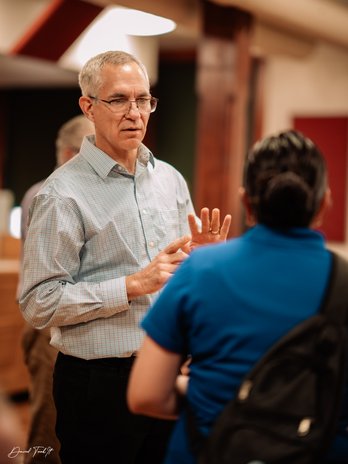
Conveners help make those connections visible, and make new ones possible.
Across Colorado, that work is helping more people find one another, learn from one another and see a role for themselves in the future of their communities.
And in a state as varied as ours, the ability to bring people together may be one of the most important leadership skills we have.
That’s the spirit of Boettcher.
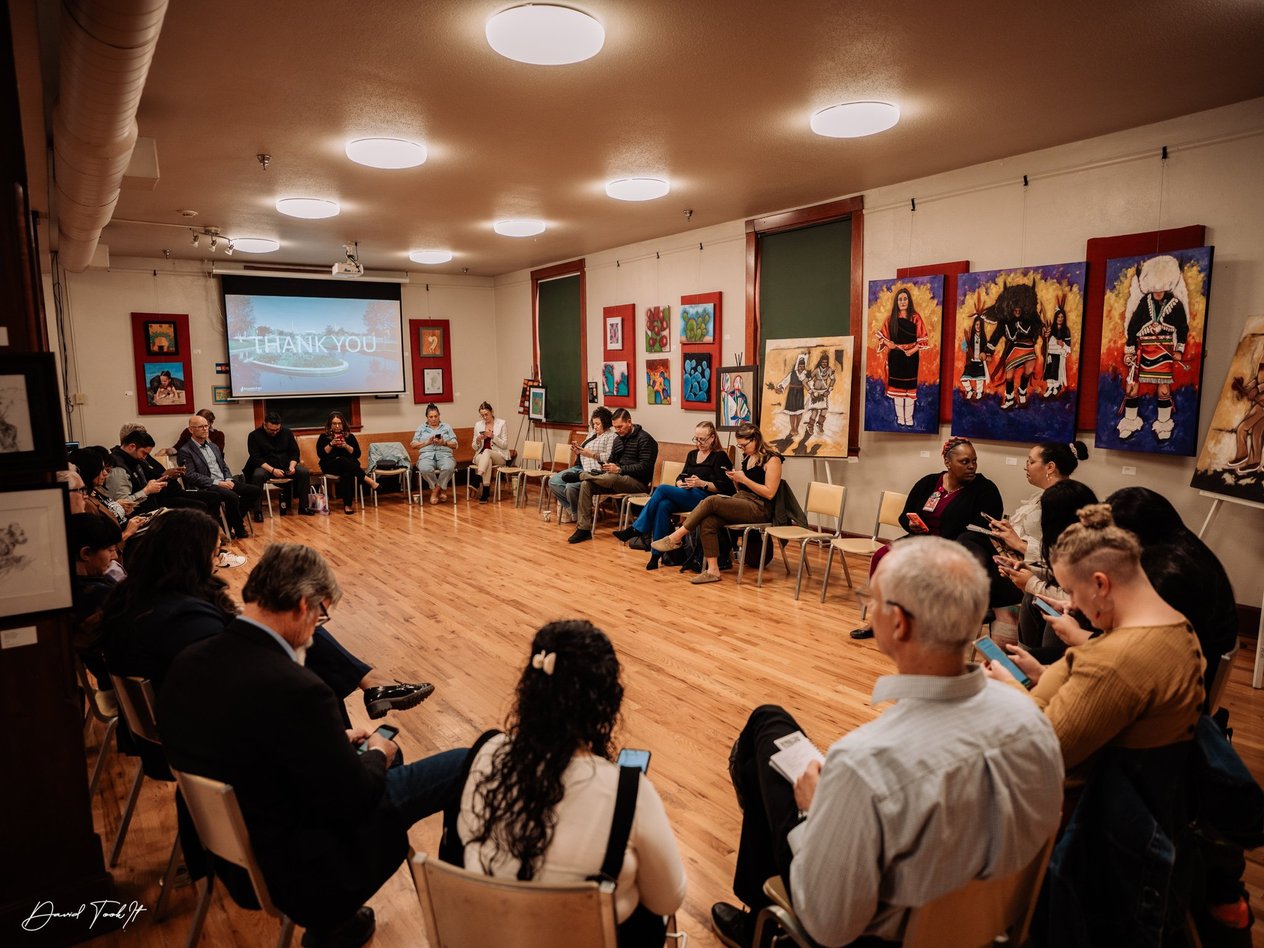
(Photos from the Boettcher Foundation’s State of Leadership convening in Pueblo in October 2025.)