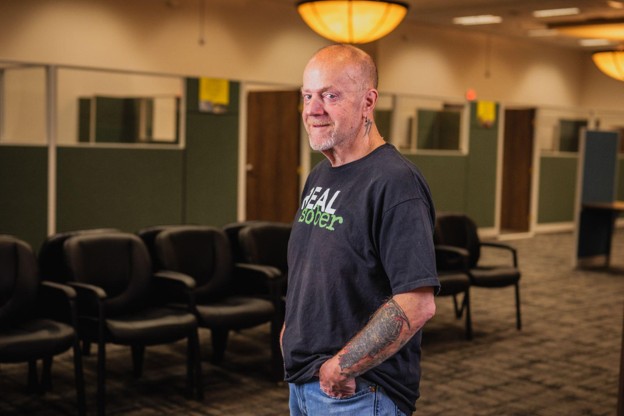
James Ranno knows what it feels like to start over.
At 64 years old, he moved to Colorado ready to explore something new. But after a series of setbacks including housing scams and financial hardship, Ranno found himself bouncing between shelters across the Denver metro area in an endless loop.
Then, one November morning, Ranno decided to try something different. He packed up all his belongings and took the first bus available to Advance Pathways’ Regional Navigation Campus in Aurora.
“I was there the first day they opened. In fact, I believe I was one of the second or third people to walk in and fill out an intake form,” Ranno said. “It was the best thing I could have ever done and I see no end in sight.”
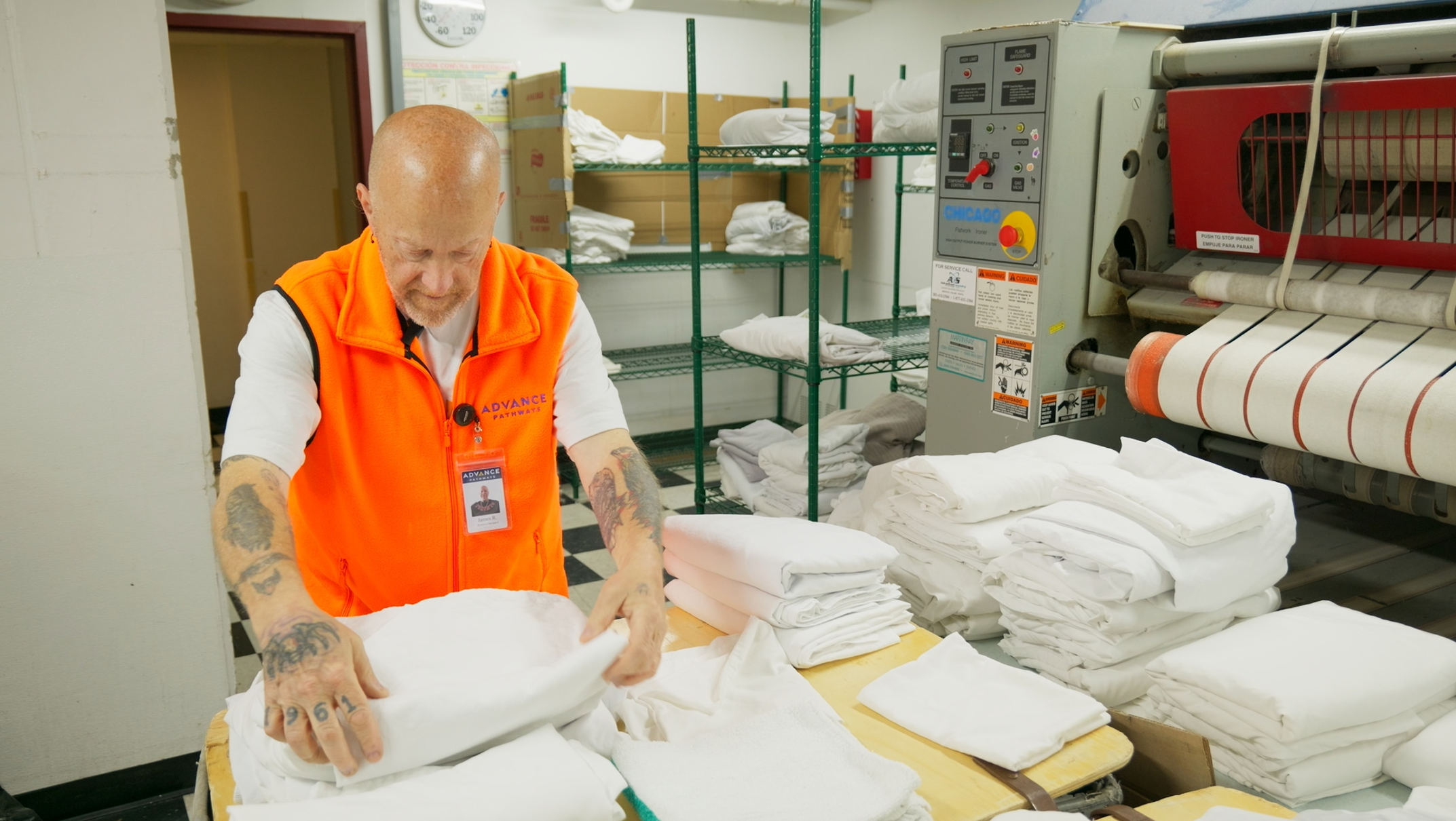
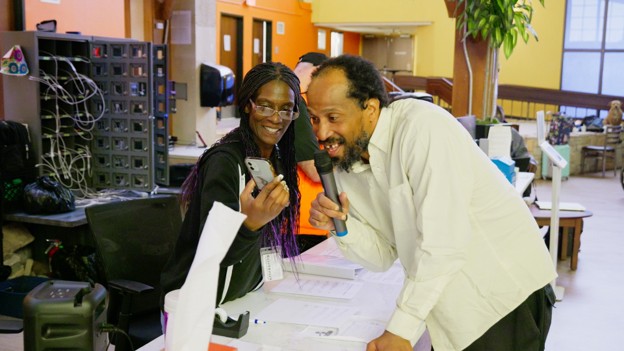
Today, Ranno works for the facility, supporting other individuals experiencing many of the same challenges he once faced.
His story reflects the broader mission behind Advance Pathways’ work at the campus, a collaborative, community-driven effort rooted in the belief that lasting solutions to people experiencing homelessness require more than temporary shelter—they require stability, opportunity, and a pathway forward.
More than a shelter
Like much of the Denver metro area, Aurora has seen a marked rise in housing instability over the last several years.
According to the Common Sense Institute’s 2023 Aurora Homelessness Report, the city’s homeless population has increased by approximately 47% since 2019. Factors including the COVID-19 pandemic, inadequate coordination across local counties, insufficient or disconnected programming, and an overall lack of emergency housing were cited as key contributors to the rise.
The number of people experiencing chronic homelessness has also risen by 85%, highlighting the growing strain on a fragmented system struggling to keep pace and create lasting outcomes.
“Many people get to a point where they are tired of being homeless and they want to do something different, but they just don’t know how,” said Jim Goebelbecker, CEO and president of Advance Pathways. “There are a lot of great organizations serving the homeless, but we cannot solve the issue by just simply building shelters and low-income housing. We need to create opportunities at a single facility so that people can access vital support.”
That’s where the Aurora Regional Navigation Campus comes in.
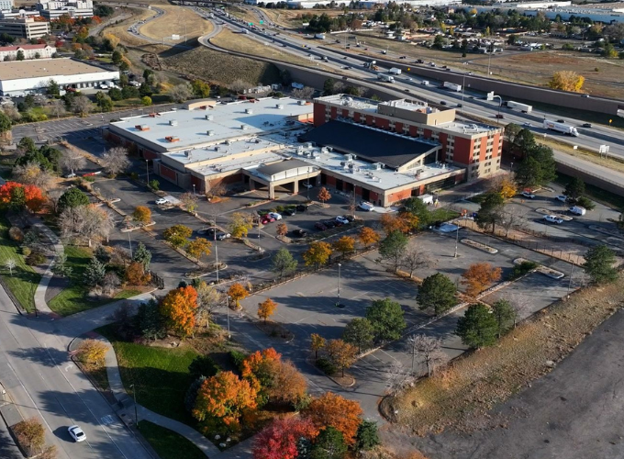
Opened in November, the first-of-its-kind center represents a new model for homelessness response in Colorado, bringing various resources and critical services together into one centralized hub.
The campus features a unique three tiered housing system designed to meet individuals where they are and provide varying levels of support.
The first tier offers low-barrier emergency shelter, providing immediate safety for nearly 300 guests at a time. Combined with additional housing and support services on the upper tiers, the campus can accommodate over 600 people, with capacity expanding to over 800 during extreme weather events—making it one of the largest homelessness response facilities in the country.
Tier two shifts the focus from crisis response to stability. Here, residents work alongside case managers and partner organizations to access employment resources, healthcare, behavioral health support, financial coaching, and other services aimed at helping residents regain control of their lives.
The third tier is designed to help residents take the next step. Through increased independence and continued support, individuals can focus on securing permanent housing, building financial security, learning crucial life skills, and creating a sustainable path forward.
“We think of this as the path to self-sufficiency,” said Goebelbecker. “Our fundamental belief is that people can achieve much more than where they are with the right resources and incentives. We extend an invitation for services. Once guests accept that invitation and accept our services, we can really start to make a meaningful difference in our community.”
Teamwork makes the dream work
So far, the center is off to a strong start, providing long-term stability services to more than 3,000 people since its launch.
But perhaps even more impressive is the community engagement and network of partnerships behind it.
In 2024, the City of Aurora announced the creation of the Regional Navigation Campus as part of a landmark regional collaboration involving Adams, Arapahoe, and Douglas counties. Together, the partners pooled more than $40 million in funding to transform the former Crowne Plaza Hotel into a fully functioning homelessness facility.
Goebelbecker and his team at Advance Pathways were selected by the city to serve as the facility’s lead operator. Today, alongside more than 30 community partners, the group is looking to push boundaries and take their efforts to the next phase of success.
“Our overall goal is to reduce homelessness in Aurora by 50% by 2030,” Goebelbecker said. “However, homelessness is a complicated challenge. It takes an entire community banding together in order to respond and create the pathways we want.”
One of those impactful collaborators is Daniels Fund, a non-profit organization that supported the founding of Advance Pathways. They have just renewed a $2 million annual contribution to the center earlier this month.
Many others, like Stride-Community Health, Housed, Working & Healthy, and Ascend Recovery Solutions, can be seen on-site in a day-to-day capacity helping members of the program obtain healthcare, career coaching, benefits navigation, and even simple documentation.
Recently, Boettcher Foundation also stepped into the fold, awarding Advance Pathways a $75,000 Community Connections Grant. Goebelbecker says the funding will help them introduce and support even more programs and nonprofit service providers going forward.
“We would love to offer culinary classes in our facility’s commercial kitchen as part of our programming,” said Goebelbecker. “Maybe even create some more social enterprises. That way we aren’t just helping people find work elsewhere, but we’re also offering opportunities to work at the campus in a more structured, supportive environment.”
The Power of Place
Yet for all the statistics, partnerships, and services housed by Advance Pathways within the campus, Goebelbecker believes its greatest impact is far more personal.
In many ways, the Regional Navigation Campus embodies the idea that place matters.
“The center is a place where people feel safe. Where they can have deeper conversations about hopes and dreams and be vulnerable,” Goebelbecker said. “We strive to provide that kind of space, one person at a time, so that people know they have a support system who believes in them and their renewal.”
But for residents like Ranno, the power and beauty of the Regional Navigation Campus isn’t just found in the building itself. It’s found in the new possibilities it opens for the people who walk through its doors.
“I don’t consider homelessness as being homeless. I call it being displaced,” Ranno said. “Everybody finds themselves stuck at some point. But the center gives you a chance to pull yourself out. If you take that chance and put your best foot forward, you can be anywhere you want to be.”
That’s the spirit of Boettcher.