Colorado’s strength in biomedical research grows from the work of early-career investigators who ask big questions and pursue them with rigor. For sixteen years, Boettcher Foundation and Colorado BioScience Association have partnered to support that the state’s most promising scientists through Boettcher Foundation’s Webb-Waring Biomedical Research Awards Program. The program helps researchers build momentum at a pivotal stage and strengthens Colorado’s ability to retain exceptional scientific talent.
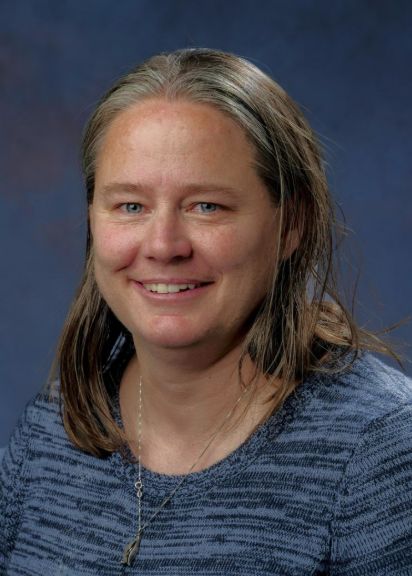
Robin Dowell, D.Sc., Professor of Molecular, Cellular and Developmental Biology at the University of Colorado Boulder BioFrontiers Institute, reflects that impact clearly. The longtime faculty leader’s research merges genetics and computer science to investigate transcriptional regulation, and she has built a career defined by collaboration across disciplines. As a member of the inaugural class of Boettcher Investigators, she used the award to expand her lab’s early capabilities, refine her scientific focus, and pursue ideas that later led to the founding of Arpeggio Biosciences.
In this Q&A with Colorado BioScience Association, Dowell discusses how early support shaped her research trajectory, what she sees in Colorado’s collaborative life sciences community, and the guidance she shares with current and future Boettcher Investigators.
Content has been edited for length.
Question: You were part of the inaugural class of Boettcher Investigators. What did the Webb-Waring Biomedical Research Award mean to you at the time and how has it influenced the trajectory of your research and career?
Answer: Receiving the Webb-Waring Biomedical Research award was great, it was my first grant of any substantial size. It was a nice pat on the back in terms of, “Yes, you can do this. Let’s get going!”
I really appreciate the program….and the investment in Colorado and in young researchers. I think it enabled us to do go in some directions we might not have done otherwise.
Question: The Webb-Waring Biomedical Research Awards Program is designed to retain top scientific talent in Colorado and give early-career scientists the runway they need to advance their research and eventually seek additional funding from federal and private sources. Could you share how your Webb-Waring Biomedical Research Award helped advance your work?
Answer: Part of it was the grant experience. It also enables work beyond what you could have afforded on that initial startup package.
Later, I received a National Science Foundation grant and an NSF career award. I had several NSF grants before a got an NIH grant. Part of that is because I have a strong interest in the educational side of things and NSF grants have an educational component.
Boettcher is an opportunity and it’s one that I “advertise” so to speak to incoming prospective faculty. This is a way that you can supplement that startup and get some grant experience all at the same time. It’s an opportunity I don’t think any of the junior faculty should actually pass up. Both a career growth perspective but also from an opportunity perspective moneywise.
Question: Boettcher Foundation and Colorado BioScience Association celebrate 16 years of partnership this year. From your perspective, what’s most important about Boettcher Foundation’s investment in Colorado’s researchers and the broader life sciences community through the Webb-Waring Biomedical Awards Program?
Answer: Boettcher is making a pretty big impact on the quality of research that’s being done in Colorado and it’s all the way down to me. The Boettcher award itself was amazing at the time I got it. It made a lot of opportunities for me research-wise, but the one of the real strengths of has been [the intersection with the] Boettcher Scholar program. They fund high schoolers to go to college, but they also play the dating game between the scholars and the investigators. We can write little research blurbs, send them to Boettcher, and then they’ll send them out to the Boettcher Scholars and say, “Hey, these are some research projects you could potentially get interested in.” And if one of them gets interested in one of your research projects, Boettcher pays for their hourly stipend for a year or so in the lab.
I have had some absolutely incredible undergrads come through my lab that were Boettcher Scholars.
I haven’t had a ton of them, but the ones I’ve had been so successful that to me that is one of the great rewards of the Boettcher program over long term is providing those undergrads with incredible research opportunities in some of the best labs in the state.
It’s a complete win-win-win. It’s during that training period where students just absorb in as much as they can and it’s all positive.
Question: You’ve mentored countless students through your work at the BioFrontiers Institute and CU Boulder. How does it feel to see CU Boulder Boettcher Investigators following in your footsteps?
Answer: It’s been wonderful. I have served on the [Webb-Waring Biomedical Awards Program] selection panel for several years now, minus a sabbatical year. I do have to recuse myself when there are faculty from here.
I’ve helped several junior faculty with suggestions on how to write their grants, giving them internal review before they submit to Boettcher Foundation. It’s been great to see them get that money and then be able to use it like I did, and take research in new directions.
Question: You’re also a cofounder of Arpeggio BioSciences, a well-known company in Colorado’s life sciences community. How did your academic work lead to Arpeggio’s founding?
Answer: Arpeggio came out of the work that was joint between myself and Joey Azofeifa. We had this idea that was based on some observations by Dr. Mary Allen. But there wasn’t really a computational way to go after those patterns and to confirm that both that they exist and to do anything with them. We had a rough first prototype method to do it that showed a little bit of promise, but it was kind of slow and clunky…not genomewide effective. It worked in certain contexts. It was really Joey’s genius that took that little spark and turned it into an algorithm for analyzing nascent transcription assays that could identify these bidirectional transcripts that are the key hallmarks of enhancers.
When Joey graduated, we were all sitting around at dinner one evening, on a lab outing, and it was discussed that, “why don’t we start a company?” My first gut was…I have a job. I’m good. All right. No, thank you.
A couple of months [later], he came back and he said, “No, I really think we should start a company. We’ve been talking with some of the people we consult with, and this company would have real wheels.” So then, he, Dan Weaver, who’s the head of Boulder Bio Consulting, Tim Read, and I got together and had a few chats, we hammered it out that yeah, we could start a company on the ideas behind TFIT and that became Arpeggio.
Laura Norris was brought in. She does amazing administrative organization and got a lot of the business part of it rolling.
I still have ownership in the company but don’t have active day-to-day involvement.
Question: Speaking about startups, CU Boulder recently ranked as number one in the country for spinouts from university research. What does working at a university known as an innovation engine, with such a strong venture arm mean for early-career researchers?
Answer: CU helped do a lot of the paperwork lift on the patent and they worked with Joey to get some favorable licensing to Arpeggio initially to be able to use that patent. They were very understanding of early company models in terms of inflows and outflows and licensing that essentially at future promise more so than current capacity.
The other benefit that CU gave to Arpeggio was the incubator space in this building. It was a really nice facility at a reasonable rate.
The physical resources, particularly when you’re starting a company that has a lab component, can’t be underestimated. Putting together one of those labs and the safety concerns and all of the regulations can be a full-time job for somebody. If they can plug into an incubator space at an at an institution like CU, it just gives a long a runway so to speak.
Question: What advantages do you see for biotech startups launching and growing in Colorado’s collaborative life sciences ecosystem?
Answer: They’re going to sound a little stereotypical, but I think they’re real. Colorado is a nice place to live. And, particularly among startup companies, I think there’s a tendency for a work hard, play hard kind of environment. And Colorado provides the “play hard” options literally out that door, right out that window.
There’s a strong community spirit and there’s a lot of general business help. I’ve had many conversations with Marv Carruthers, he’s started a bazillion companies, many of them successful. The same with Larry Gold and Leslie Leinwand. Roy Parker also recently got into this.
There’s just an entrepreneurial spirit that comes with being at CU and then there’s a support community that endorses this as a real career path and provides people with the emotional and advice-type help.
Question: Boettcher Investigators are known for advancing high-impact research early in their careers. What advice would you give the current class of Boettcher Investigators.
Answer: The advice for people applying that I always give is to get a copy of a recent successful application.
You can see what they’re structured like…to think about the translational and medical impact of the work you do because I think that’s an important component to the Boettcher Foundation.
For current investigators, this is generic faculty advice, but you should always have one really big home run project running in the background and then at least one slam dunk.
It could be hard to juggle at times. If you put all your eggs into the “slam dunk” basket and it doesn’t work you’re in trouble. But if you just do boring stuff, it gets too tedious and monotonous for you to be enjoying your life. So, there’s a there’s a balance in terms of the excitement and/or risk level of the types of projects that you do in research.
The nice thing about the Boettcher Investigator award is that it provides you a little bit of money so that you can maybe spend a little more time on that home run and rebalance that equation a little bit.